If you’ve ever stood in a room during a sudden tornado siren blast, or checked your phone minutes after a flood alert pinged your location, you’ve experienced what a warning system does: it turns raw, often fast-moving data into action that can save lives. But if you’ve ever sat in a strategy meeting as a warning systems supplier, you know the quiet, unglamorous work that happens before that siren even tests. That work is all about data storage—getting it right means the difference between a warning that arrives 10 minutes too late, and one that is so cluttered with useless noise it gets ignored. Over the 12 years I’ve led our small but specialized team building these systems for coastal communities, rural wildfire zones, and even urban transit hubs, I’ve seen storage make or break deployments more times than I can count. Let me walk you through what we’ve learned about the non-negotiable data storage requirements that turn a decent warning tool into one people actually trust. Warning Systems

First, you have to get the speed right—and I don’t mean fast enough to send a text. Warning systems live in the real time continuum, and that continuum splits data storage into two very separate lanes: hot storage and warm storage, with almost no room for overlap. Hot storage is the immediate, milliseconds-to-seconds space where data lives the second it’s collected. For us, that data doesn’t come from a single source. It comes from weather buoys that ping wave heights every 10 seconds, from satellite feeds that track wildfire smoke plumes in 15-minute increments, from seismic sensors that send tremor data every 200 milliseconds when an earthquake hits. Every single one of those streams needs to be accessible in less than 50 milliseconds. If a sensor detects a 6.2 magnitude quake off the coast of Oregon and the storage system takes even half a second to pull that data, by the time the alert is ready to send, it’s already too late for the communities on land waiting for evacuation orders. Hot storage for warning systems isn’t just “fast”—it’s low-latency, always-on, and built for random access, not sequential reads. We used to make the mistake of mixing hot data with historical data early on, storing real-time sensor feeds alongside 10 years of past flood reports on the same servers. It turned out that the constant I/O (input/output) load from sifting through that old historical data bogged down the hot storage, and once, during a small flood event, our system took 12 seconds longer than it should have to validate the alert. That’s when we learned: hot storage has a very narrow job, and anything not needed for real-time decision-making doesn’t belong there.
Then there’s warm storage, which is where data lives after it’s been processed and validated, but still needs to be retrieved within minutes to hours. This is the data that goes into post-event analysis: why did this flood alert send to 30 extra neighborhoods that didn’t need it? How accurate was the satellite smoke plume data compared to ground checks? Warm storage has to balance speed with cost, because warning systems don’t run on endless budgets. For our deployments in rural Wyoming, where internet bandwidth is spotty and power grids are older, warm storage has to be both on-premise and cloud-connected, with a local backup that doesn’t depend on a cell tower. A few years back, a wildfire warning test deployed in a remote part of the state had all its cloud warm storage cut off when a storm took down the local tower. We hadn’t allocated enough local warm storage to hold 72 hours of processed, post-event data, and the team had to drive 3 hours to the site just to pull the logs. After that, we adjusted our warm storage specs to hold no less than 5 days of historical processed data on-site, synced to the cloud whenever connectivity was available. The tradeoff was slight, because warm storage doesn’t need to be as fast as hot storage—we use hybrid hard drives (HDDs) that have small, fast flash caches for recent data and larger, cheaper platters for older processed data. That cut our storage costs per deployment by nearly 20%, without sacrificing the ability to pull critical data when we need it.
The third part of the storage equation is cold storage, and this is where a lot of teams get complacent. Cold storage is for data older than 6 months—data we never need to look at regularly, but that is non-negotiable for compliance, historical trend analysis, and future model training. Warning systems are heavily regulated. For example, in the U.S., FEMA requires all emergency alert data to be stored for 7 years, and state environmental agencies need access to historical flood and wildfire data for 10 years. Cold storage doesn’t need to be fast—its only job is to keep data safe, accessible when needed, and affordable. We used to use standard cloud object storage for cold data, until we realized that a small coastal town in Louisiana was paying $12,000 a year just to store 15 years of flood sensor data, most of which they only pulled once a year for their annual risk assessment. Now we use archive storage—like low-cost magnetic tape libraries or cloud cold archive tiers that have hours-long retrieval times, not minutes. That cut the cold storage cost for that same town to under $1,800 a year, and even when we need to pull an old record, the delay is irrelevant because we’re not using that data for real-time alerts. The key here is separating the three storage tiers so each does what it’s good at—hot for speed, warm for balance, cold for cheap, long-term retention—instead of trying to make one tier do all three jobs.
But storage isn’t just about speed and capacity. For warning systems, it’s about reliability—and when I say reliability, I don’t mean “doesn’t crash 99.9% of the time.” I mean it doesn’t crash when the power goes out. I’ve seen first-hand what happens when a warning system’s storage relies entirely on grid power. A 2022 ice storm in Maine took down local power for 3 days, and one coastal town’s warning system failed because their cloud storage server was in a data center that had its own power backup, but the on-site edge server that processed real-time data ran out of battery power. The storage system lost 4 hours of sensor data, and by the time power came back, the team had to manually reconstruct the alert feed. That’s why all our storage tiers for remote or rural deployments have independent power: hot storage edge servers run on both grid and solar with a 72-hour battery backup, warm storage on-prem servers have their own UPS (uninterruptible power supply), and cold archive storage in the cloud has redundant power and network links. We also use geo-redundant storage for all cloud-hosted data—so if one data center goes down, another 500 miles away has a complete copy of every alert record, sensor feed, and historical log. That’s non-negotiable. If a warning system is critical for saving lives, its storage can’t be a single point of failure.
Another often-overlooked requirement is data integrity. Warning systems depend on data that doesn’t get corrupted, mislabeled, or altered between collection and alerting. That means storage has to have built-in checksums, encryption at rest, and access controls. Early in our business, we had a problem with a wildfire system where some sensor data got mislabeled because a field tech entered the wrong location when calibrating a sensor. The storage system didn’t have any built-in validation, so the alert sent to the wrong town, causing unnecessary evacuations and costing the local government over $50,000 in overtime and resource deployment. Since then, we’ve built every storage system with schema validation: every data point from every sensor has a pre-defined format, and if it doesn’t match, it gets flagged and routed for review before it even gets stored. We also use end-to-end encryption for all stored data, so even if a device is stolen or a server is compromised, no one can read the sensor or alert data. For communities that work with sensitive data—like urban transit systems that need to alert passengers during a subway fire—we also have role-based access controls, so only authorized staff can modify or delete stored data. Data integrity isn’t just a security thing; it’s a life safety thing. A bad data entry in storage isn’t a typo—it’s a mistake that can cost people their homes or their lives.
And let’s not forget scalability. Warning systems grow, a lot. When we first deployed a small coastal flood system in North Carolina in 2018, it had 50 sensors generating 1GB of data per day. By 2023, that system had 200 sensors generating 8GB of data per day, and we expanded it to cover two additional counties. If we had built a storage system that couldn’t scale, we would have had to replace all the servers after two years, which would have cost the town more than $100,000. Instead, we designed our storage to be modular: teams can add more hot storage nodes as more sensors come online, expand warm storage capacity as more historical data is generated, and upgrade cold storage as needed without disrupting the system. Scalability doesn’t mean building a system that can hold 10 years of data on day one; it means building a system that can grow with the community, without having to overhaul the core infrastructure every few years. That’s a big part of what makes warning systems sustainable long-term.
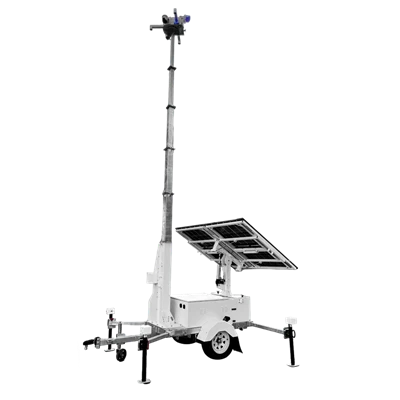
I’ve had so many conversations with other tech teams that treat warning systems like generic software, like they’re just another app that needs storage. That’s a mistake. Warning systems are life safety tools. Every requirement for their storage is rooted in one simple question: “Will this storage system get the alert to the people who need it, when they need it, without failure?” Hot storage for speed, warm for balance, cold for long-term retention, redundant power and network links, data integrity, scalability—all of these aren’t just technical specs. They’re the foundation that saves lives.
Solar Power Enclosures If you’re a public works director, emergency manager, or transit authority official looking to build or upgrade a warning system, you know that the right storage isn’t something you can cut corners on. Every dollar saved on cheap, untested storage today could cost your community tomorrow. Our team has spent years refining these requirements, working alongside emergency responders and community leaders to build systems that work when the worst happens. If you’re ready to talk through your specific needs—whether it’s a small rural wildfire zone or a large coastal metro—reach out to our team to get started on a solution that prioritizes reliability, speed, and safety.
References
- U.S. Federal Emergency Management Agency. (2021). Emergency Alert System (EAS) Compliance and Technical Standards.
- National Oceanic and Atmospheric Administration. (2022). Requirements for Real-Time Environmental Data Storage and Retrieval for Warning Systems.
- International Organization for Standardization. (2020). ISO 22301: Security and Resilience – Business Continuity Management Systems.
- National Weather Service. (2023). Best Practices for Data Storage in Weather and Environmental Warning Systems.
Shenzhen Gago Electronics Co., Ltd.
Shenzhen Gago Electronics Co., Ltd. is one of the most professional warning systems manufacturers and suppliers in China. As we have world-leading production equipment and strong manufacturing capabilities, we warmly welcome you to buy high quality warning systems at competitive price from our factory.
Address: C201,Building B, No.170 Xingfa Road,Shangcun Community, Gongming Street, Guangming District, Shenzhen, China
E-mail: info@gagoelectronics.com
WebSite: https://www.gagodeterrence.com/
