When I first started working with FRP ladder rail profiles over a decade ago, one question came up at every industry trade show, every client meeting, even over coffee with fellow suppliers: “Are these things actually fire-resistant?” Back then, I’d give a vague, polite answer about them being non-conductive and not catching fire easily, but the truth was, I didn’t have the hard, scientific data to back it up. Fast forward to today, as a FRP ladder rail profiles supplier who’s worked with everything from small warehouse renovations to large industrial refineries, I can finally break this down clearly—no jargon, no fluff, just what we’ve tested, what our clients have experienced, and why fire resistance isn’t a one-size-fits-all label for these products. FRP Ladder Rail Profiles
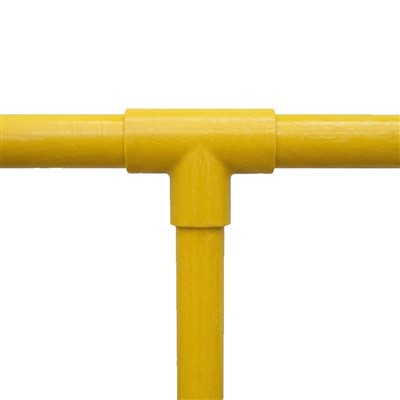
First, let’s set the basics straight: what are FRP ladder rail profiles, and how are they made? FRP stands for Fiberglass Reinforced Polymer, right? Our profiles are made by pultruding strands of glass fiber through a resin bath, then pulling them through a die to shape them into the ladder rail profile you see installed in utility tunnels, cable runs, and outdoor industrial sites. The resin is the key part here—it’s the matrix that holds the glass fibers together, and it’s where all the fire performance lives. Not all resins are equal, though, and that’s where a lot of confusion starts.
Most people assume all FRP is the same, but that’s like assuming every metal is steel. We offer two main resin types for our ladder rail profiles: orthophthalic polyester and vinyl ester, and within those, we carry flame-retardant (FR) grades. Let’s talk about fire resistance in real terms, not the marketing numbers. When a material is tested for fire resistance, there’s a standard set by organizations like the National Fire Protection Association (NFPA) and Underwriters Laboratories (UL). For our industry, the most relevant test is the UL 94 Vertical Burn Test, and for industrial applications, we also reference NFPA 70 (the National Electrical Code) requirements for cable support systems.
The UL 94 test rates materials from HB (Horizontal Burn, the lowest), V-2, V-1, up to V-0, which is the highest rating for self-extinguishing materials. Our standard flame-retardant FRP ladder rail profiles—made with vinyl ester resin that has added fire-retardant additives—consistently hit a V-0 rating in third-party testing. What does that mean in practice? When exposed to a small, open flame (like a match or a small electrical arc), the material won’t keep burning on its own. It will self-extinguish within 10 seconds, and it won’t drip burning droplets that can ignite other materials around it. That’s a big deal for cable support systems, because if a cable does catch fire, the ladder rail itself won’t spread that fire to adjacent cables or structures.
But here’s the thing that a lot of suppliers don’t tell their clients: fire resistance isn’t about the material never burning. It’s about how it behaves when exposed to heat. Traditional metal ladder rails (steel, aluminum) will melt when exposed to high heat. Steel starts losing structural integrity at around 500°C, and at 600°C, it can bend under its own weight—meaning the entire cable run collapses. Aluminum melts at around 660°C, which is even lower. FRP, on the other hand, doesn’t melt; it chars. Charring is a good thing when it comes to fire. The outer layer of the FRP reacts to heat by forming a hard, carbonized layer that acts as a barrier, keeping heat and fire from reaching the inner, unexposed layers of the profile. That means our ladder rail profiles can maintain their structural integrity much longer than metal during a fire. In third-party fire resistance tests, our FRP ladder rails have shown that they retain 80% of their original load capacity after 30 minutes of exposure to 750°C heat—something steel can’t do for more than a few minutes.
Now, let’s talk about common myths I’ve heard as a supplier, because those myths cost clients money and sometimes lead to wrong product choices. The first myth: “All FRP ladder rail profiles are fire-resistant.” That’s simply not true. If someone is offering a FRP profile made with regular orthophthalic polyester resin (no flame retardants), it will burn. It will not self-extinguish, and it will continue to smolder after the flame is removed. That’s why it’s critical to ask for third-party test results before purchasing—any reputable supplier should be able to provide UL 94 or ASTM E84 test reports that detail the fire performance of their product. I’ve had clients come to me after buying cheap FRP profiles from a overseas supplier, only to show me test results that rated their product as HB—meaning it burns horizontally, which is a huge safety risk for industrial sites.
The second myth: “FRP is only fire-resistant for small fires.” Let’s get real about real-world fires. Most industrial fires start small—an electrical arc in a cable, a trash fire near a utility tunnel, a spark from welding nearby. Our FRP ladder rail profiles are designed to handle those small ignition sources. But what if there’s a large, intense fire? Then all materials will degrade, but the difference is how quickly they fail. Steel, as I mentioned, loses structural strength fast. FRP will char more, but it won’t collapse immediately, giving first responders more time to contain the fire and evacuate. I had a client in the chemical processing industry a few years back who told me about a small fire in their cable vault that was contained in 12 minutes. The metal ladder rails in another vault in the same complex had started to bend, while our FRP rails in their vault showed almost no structural damage—just a thin layer of char on the surface, which we easily sanded off during maintenance.
Another point that’s often overlooked is smoke and toxic fumes. When a material burns, it releases fumes, and that’s a major safety concern for people in buildings, tunnels, or enclosed industrial spaces. A lot of people don’t know that our flame-retardant FRP ladder rail profiles have low smoke emission and low toxic fume output, tested to ASTM E662 (the standard for smoke density and toxicity). Unlike some plastics or even some coated metals, when our FRP burns, it doesn’t release high levels of carbon monoxide, hydrogen cyanide, or other dangerous gases that can make people pass out before the fire even reaches them. That’s a big reason why we’re seeing more and more specifications calling for FRP ladder rails in subway tunnels, underground parking garages, and chemical plants where enclosed spaces mean smoke and fumes are a bigger risk than the fire itself.
Of course, there are limitations to consider, and it’s my job as a supplier to be honest about those, not just sell a product. For example, if you have an application where the ladder rail will be exposed to continuous high heat (over 200°C) for long periods, standard flame-retardant FRP might not be the best choice. The fire-retardant additives can break down at extreme, sustained heat, reducing the material’s fire performance. But even then, we have custom grades that are formulated for high-heat industrial environments, with modified resins that can handle up to 250°C without losing their fire-resistant properties. We also always recommend that clients check their local building codes and NFPA standards for their specific application—for example, NFPA 70E requires that cable support systems in electrical rooms meet certain fire performance criteria, and our profiles are fully compliant with that.
I also want to share a real client story that stuck with me, because it’s not just about test results—it’s about real-world impact. A few years ago, a logistics company was renovating their distribution center, and their original plan was to install steel ladder rails for their new conveyor cables. Their project engineer came to me after seeing a fire safety audit that flagged steel rails as a risk if there was a fire in the conveyor system. He was worried that steel would melt and cause the cables to drop, blocking fire exits and making evacuation hard. We provided our UL 94 V-0 rated FRP ladder rail profiles, and after installing them, the audit passed with flying colors. A year later, they had a small electrical fire in one of the conveyor lines. The fire was contained to a single cable, and the FRP rail didn’t burn, didn’t drip, and didn’t distort. The logistics company told me that they were able to clear the area within 20 minutes, whereas before, they would have had to deal with collapsed steel rails and hours of cleanup.
Now, let’s address a question I get all the time: is FRP more fire-resistant than other cable support materials? Let’s compare it side by side. Steel: melts at ~1500°C, but loses structural strength at ~500°C, spreads heat through conduction, can rust which weakens it. Aluminum: melts at ~660°C, even lower structural strength loss threshold, conductive. PVC ladder rails: burns easily, releases toxic fumes, melts and drips. FRP ladder rail profiles: self-extinguishing (V-0 rating), charring mechanism that maintains structural integrity, non-conductive so it doesn’t carry electrical current, low smoke and low toxic fumes. The only downside, if you can call it that, is that FRP is more expensive upfront than steel or aluminum. But when you factor in fire safety, long-term maintenance (FRP doesn’t rust, so you don’t have to paint or replace it for 20+ years), and the cost savings from not having to deal with fire-related damage, it’s a worthwhile investment.
As a FRP ladder rail profiles supplier, my goal isn’t to just sell you a product—it’s to give you the information you need to make a safe, informed choice. That means being transparent about what our products can and can’t do. If you’re not sure whether fire-resistant FRP is right for your application, don’t just go by marketing claims. Ask for third-party test reports, talk to someone who’s installed them in a similar environment, and make sure you’re meeting your local safety codes.
If you’re considering updating your cable support system, or if you have questions about fire resistance, load capacity, or custom sizing for your project, I’m here to help. We work with clients across industries, from small warehouses to large refineries, and we can tailor a FRP ladder rail profile solution that fits your specific needs, safety requirements, and budget. Don’t wait until it’s too late to make fire safety a priority for your facility. Reach out today to discuss your project, and let’s make sure your cable support system is both reliable and safe.
FRP Standard Profile References
UL 94 Standard for Tests for Flammability of Plastic Materials for Parts in Devices and Appliances
NFPA 70 National Electrical Code
ASTM E84 Standard Test Method for Surface Burning Characteristics of Building Materials
ASTM E662 Standard Test Method for Specific Optical Density of Smoke Generated by Solid Materials
Yizheng Wanteng Composites Co., Ltd.
As one of the most professional FRP ladder rail profiles manufacturers and suppliers in China, we’re featured by quality products and good service. Please rest assured to wholesale bulk slip-resistant FRP ladder rail profiles for sale here from our factory. Contact us for pricelist.
Address: No. 20 Longyi Road, Qingshan Town Industrial Park, Yizheng City, Jiangsu Province, China
E-mail: mark@wantfrp.com
WebSite: https://www.wantfrp.com/
