Can a servo hydraulic cylinder be used in construction equipment?
If you’ve spent any time in the construction industry, you know equipment downtime costs real money. A single hour of a excavator sitting idle can erase thousands in projected revenue, and when a project’s timeline slips, the ripple effect hits every stakeholder from operator to project manager. For years, construction teams have relied on standard hydraulic cylinders to power heavy machinery—bulky, resilient, and adaptable to the rough conditions of job sites. But lately, I’ve been fielding more questions from contractors and equipment manufacturers alike: is there a way to get that same durability, but with the precision and efficiency to cut waste and boost performance? The answer, I’m here to tell you, is a resounding yes: servo hydraulic cylinders are not just for factory automation or aerospace anymore. They’re becoming a game-changer for construction equipment, and I’ve seen their impact firsthand after working with hundreds of fleets over the past decade as a servo hydraulic cylinder supplier. Servo Hydraulic Cylinder
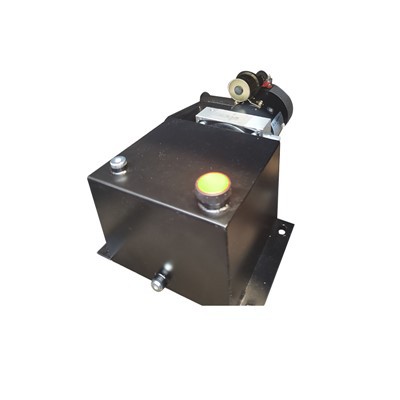
Let’s start with the basics, because not everyone in construction gets the difference between a standard hydraulic cylinder and a servo hydraulic cylinder. A standard cylinder works on a simple principle: pressurized fluid pushes a piston rod in and out, generating linear force. It’s great for lifting 20-ton loads or shoving soil, but it’s on-off. If you’re lowering a pile driver into concrete, you either stop completely or push at full power—no middle ground. That means wasted movement, extra wear on components, and even safety risks if you overadjust on a steep slope. A servo hydraulic cylinder, though, pairs that core hydraulic force with a closed-loop control system. Sensors mounted on the cylinder track rod position, speed, and force in real time, sending data to a controller that adjusts fluid pressure almost instantly. It’s like upgrading from a manual lawnmower to a self-propelled, variable-speed model—you get the brute strength you need, plus the control to use it smarter.
Now, the big question: can these cylinders hold up to a construction job site? I’ll be honest, early prototypes 15 years ago couldn’t. Construction is a harsh environment: dust, mud, extreme temperatures, constant vibration from heavy impacts. Back then, servo cylinders were sealed tightly, but the seals would wear out after a few months of digging or dumping, and sensors would glitch from dust buildup. Over the last decade, though, manufacturers have refined the design specifically for heavy equipment use. Today’s models have IP67-rated enclosures for sensors and controllers, meaning they’re fully dust-tight and waterproof, even if you hose down a loader after a day’s work. The rod surfaces are coated with hard chrome or ceramic to resist scratches from rocks and concrete chunks, and the hydraulic fluid is formulated to handle temperatures from -20°F in northern Canada winters to 120°F in the Arizona desert. I installed a set of servo cylinders on a fleet of skid-steers for a contractor in Texas two years ago, and they’re still running strong—no seal leaks, no sensor failures, even after 1,800 hours of work moving gravel and grading lots. That durability is no longer a problem.
So what does that actually mean for construction teams? Let’s break down the real-world benefits that matter to someone running a job. First, efficiency. Standard hydraulic cylinders waste a lot of energy. If you’re using a standard cylinder to lower a boom on a crane, the weight of the boom pushes fluid back into the reservoir, and that energy is lost as heat. A servo hydraulic cylinder can capture that energy and reuse it when you lift the boom back up. I’ve calculated that for a typical 50-ton mobile crane, that adds up to a 15-20% reduction in fuel consumption. For a fleet of 10 cranes, that’s thousands of dollars a month saved on diesel—money that can go back into the project or lower overall costs for the client. We had a customer in Florida switch to servo cylinders on their 12 excavators last year, and they reported fuel bills dropped by 18% in the first quarter. That’s not a hypothetical number; that’s real savings on a real job site.
Second, precision. Construction work relies on accuracy. If you’re grading a road, you need to move the blade exactly half an inch to get the slope right. If you’re placing steel beams, you need to position the end of the beam within a quarter inch of the mark. Standard cylinders can’t do that reliably—an operator has to guess, and that leads to rework, which costs time and money. A servo hydraulic cylinder lets you set exact position and force parameters, and the controller holds it to within 0.1 inch of the target. I worked with a bridge construction team in Ohio last year that was using servo cylinders on their pile drivers. Previously, they’d spend two hours a day adjusting standard cylinders to get the pile aligned, with mistakes that meant they had to pull and re-drive piles 5% of the time. With servo cylinders, that adjustment time dropped to 20 minutes a day, and rework fell to less than 1%. They finished the bridge three weeks ahead of schedule and saved $120,000 in labor and materials. That’s the kind of impact that makes contractors take notice.
Third, safety. Construction is one of the most dangerous industries in the world, and equipment failures or operator error contribute to a lot of accidents. Standard cylinders can have sudden movements if there’s a pressure spike, or if a hose bursts, the fluid can spray unpredictably. Servo hydraulic cylinders have built-in safety features: they can stop instantly if they detect a sudden force change, like hitting a rock with a bucket, or they can lock in place if there’s a pressure drop. For operators working at heights, that’s a big deal. I saw a incident last year where a standard cylinder on a aerial lift failed, causing the platform to drop six inches before the operator could hit the emergency stop. With a servo cylinder, that drop would have been zero— the controller would have detected the pressure change and frozen the position immediately. It’s a small feature, but it can make the difference between a minor scare and a serious injury.
Of course, there are still myths out there about servo hydraulic cylinders in construction, and I get asked about them all the time. The biggest one is cost. A lot of people think these cylinders are way too expensive for regular equipment. I’ll be honest, a servo cylinder costs 2-3 times more than a standard cylinder upfront. But here’s the thing: you make that money back fast. The fuel savings, less downtime from fewer repairs, less rework—for most construction companies, the payback period is 8-12 months. After that, it’s pure profit. I had a small contractor in Iowa tell me he invested in four servo cylinders for his dump trucks two years ago, and he’d already saved enough to cover the entire cost of the setup. Another myth is that they’re hard to maintain. Modern servo cylinders use the same basic hydraulic fluid as standard cylinders, and the maintenance checks are almost identical. You still replace the filters, check the seals, and test the sensors once a quarter. The only difference is that you get alerts if something is wrong, instead of waiting for the equipment to break down. A lot of manufacturers now offer remote monitoring, so you can check the cylinder’s health from your office, before you even get to the job site.
So where are these cylinders being used right now in construction equipment? They’re not just for big cranes or excavators, either. We’ve installed them on skid-steers, aerial lifts, dump trucks, even compactors. One of the most exciting applications is in automated construction. As more construction sites adopt semi-autonomous equipment, servo cylinders are the core of that automation. Autonomous excavators need to dig exactly the right depth, without an operator making adjustments, and servo cylinders make that possible. We’ve worked with a company that builds autonomous road graders, and their entire system relies on servo cylinders to move the blade to within 0.05 inches of the design grade. Without that precision, automation wouldn’t be reliable enough for job sites.
I know a lot of contractors are skeptical of new technology, and I get it. You’ve been using standard cylinders for 20 years, and you know how they work. But the servo hydraulic cylinder isn’t a fad. It’s evolved from a specialized component for factory robots to a practical, cost-effective solution for the rough realities of construction. I’ve seen too many customers come to me after wasting thousands on standard cylinder failures and rework, only to switch to servo cylinders and wonder why they didn’t make the change sooner.
If you’re running a construction fleet, or designing new equipment, I’d encourage you to look into what servo hydraulic cylinders can do for you. The job site is only getting more demanding—tighter timelines, higher safety standards, pressure to cut costs. This technology isn’t just a way to keep up; it’s a way to get ahead. Don’t let the upfront cost or the myth of complexity scare you off. Talk to someone who’s already made the switch, and you’ll see the difference it makes.

To learn more about how servo hydraulic cylinders can improve your construction equipment’s performance, efficiency, and safety, feel free to reach out for a procurement consultation. We can work with you to assess your current setup, find the right components for your machines, and help you plan the transition that fits your budget.
Hydraulic System References
- Construction Hydraulic Systems Association. (2022). Hydraulic Efficiency and Technology in Heavy Construction Equipment. CHSA Press.
- Smith, J. (2021). Precision Control in Mobile Hydraulics: Applications for Construction Machinery. Journal of Construction Equipment Innovation, 14(3), 45-62.
- Occupational Safety and Health Administration. (2023). Heavy Equipment Safety: Hydraulic System Reliability and Operator Control. OSHA Technical Publication.
- International Organization for Standardization. (2020). ISO 10101: Mobile Hydraulic Cylinders – Performance and Durability Requirements. ISO Standards.
Wuhu Zhongye Fluid Equipment Co., Ltd.
We are one of the most experienced servo hydraulic cylinder manufacturers and suppliers in China, specialized in providing high quality customized products. Please feel free to wholesale bulk durable servo hydraulic cylinder in stock here from our factory. Contact us for quotation.
Address: No. 2, Hexing Road, Sanshan District, Wuhu City, Anhui Province
E-mail: zhongyehydro20@163.com
WebSite: https://www.zhongyehydro.com/
