Mirrors are ubiquitous in our daily lives, from the bathroom vanity to high – end optical instruments. One crucial yet often overlooked aspect of mirror performance is thermal expansion. As a supplier of Mirror Safety Backing, I’ve witnessed firsthand how the right backing can significantly impact a mirror’s thermal expansion characteristics. In this blog post, I’ll delve into the science behind mirror thermal expansion, explain how mirror safety backing comes into play, and highlight why it matters for various applications. Mirror Safety Backing

The Science of Mirror Thermal Expansion
To understand the influence of mirror safety backing on thermal expansion, we first need to grasp the concept of thermal expansion itself. All materials, including the glass used in mirrors, expand when heated and contract when cooled. This phenomenon is due to the increased kinetic energy of the atoms or molecules in the material. As the temperature rises, the atoms vibrate more vigorously, causing the material to occupy a larger volume.
The coefficient of thermal expansion (CTE) is a key parameter that quantifies how much a material will expand or contract per unit length for a given change in temperature. For glass, the CTE can vary depending on the type of glass. For example, soda – lime glass, which is commonly used in household mirrors, has a relatively high CTE compared to some other specialty glasses.
When a mirror undergoes temperature changes, the thermal expansion can lead to several problems. If the expansion is not properly managed, it can cause the mirror to warp, crack, or even break. This can be especially problematic in applications where precision is crucial, such as in telescopes or scientific instruments. In addition, in large – scale mirrors used in architectural facades, thermal expansion can lead to aesthetic issues and structural instability over time.
How Mirror Safety Backing Affects Thermal Expansion
Mirror safety backing serves multiple functions, and one of its important roles is to mitigate the effects of thermal expansion. Here are some of the ways in which it does so:
1. Dampening the Expansion Forces
A good mirror safety backing acts as a shock absorber for the expansion forces generated by the glass. When the mirror expands due to an increase in temperature, the backing can deform slightly to accommodate the extra volume. This reduces the stress on the glass, preventing it from cracking or warping. The backing material is chosen for its ability to absorb and distribute these forces evenly across the surface of the mirror.
For example, some of the safety backings we supply are made of flexible polymers. These polymers have a higher degree of elasticity compared to glass. When the glass expands, the polymer backing can stretch to some extent, taking on part of the strain and protecting the glass from excessive stress.
2. Providing a Stable Thermal Environment
Mirror safety backing can also help create a more stable thermal environment for the glass. It acts as an insulator, reducing the rate at which heat is transferred to and from the mirror. This means that the temperature changes within the mirror are more gradual, reducing the magnitude of the thermal expansion and contraction cycles.
In a building with a large mirror installation, the exterior temperature can fluctuate significantly throughout the day and night. Without proper insulation from the safety backing, the mirror would be subject to rapid temperature changes, leading to more severe expansion and contraction. By preventing heat from flowing in and out too quickly, the backing helps to maintain a more consistent temperature within the mirror, minimizing the negative effects of thermal expansion.
3. Compensating for Differential Expansion
In some cases, the mirror may be attached to a frame or other supporting structure. These structures may have different coefficients of thermal expansion compared to the mirror glass. This can lead to differential expansion, where the glass and the supporting structure expand or contract at different rates.
Mirror safety backing can help compensate for this differential expansion. It can act as a buffer between the glass and the supporting structure, allowing for some relative movement without causing damage to the mirror. Our safety backing products are designed to be compatible with a wide range of supporting materials, ensuring that they can effectively mitigate the issues caused by differential expansion.
Why It Matters in Different Applications
The impact of mirror safety backing on thermal expansion is not just a theoretical concern; it has real – world implications for various applications.
1. Architectural Mirrors
In architectural applications, large mirrors are often used in facades, interior partitions, and decorative elements. These mirrors are exposed to the elements and can experience significant temperature changes. If the thermal expansion is not properly managed, the mirrors can develop visible cracks or warping, which not only affects their aesthetic appeal but also their structural integrity.
By using our high – quality mirror safety backing, architects and building owners can ensure that the mirrors remain in good condition for a longer time. The backing helps to prevent damage caused by thermal expansion, reducing maintenance costs and the need for premature replacement.
2. Optical Instruments
In optical instruments such as telescopes, microscopes, and cameras, the precision of the mirror is crucial. Even a slight change in the shape of the mirror due to thermal expansion can degrade the optical performance. For example, in a telescope, a warped mirror can cause blurry images and inaccurate observations.
Our safety backing products are designed to meet the high – precision requirements of optical instruments. They help to maintain the shape of the mirror within tight tolerances, ensuring that the optical quality remains consistent even under varying temperature conditions.
3. Automotive Mirrors
Automotive mirrors are exposed to a wide range of temperatures, from extreme cold in winter to scorching heat in summer. Thermal expansion can cause the mirror to warp or crack, which can be a safety hazard for drivers. A distorted mirror can provide inaccurate reflections, making it difficult for the driver to judge the distance and movement of other vehicles.
Our mirror safety backing for automotive applications is engineered to withstand the harsh environmental conditions. It helps to protect the mirror from thermal damage, ensuring clear and reliable reflections at all times.
The Importance of Choosing the Right Mirror Safety Backing
Not all mirror safety backings are created equal. When it comes to managing thermal expansion, several factors need to be considered when choosing a backing:
1. Material Properties
The material of the backing plays a crucial role in its ability to mitigate thermal expansion. As mentioned earlier, flexible polymers are often a good choice because of their elasticity. However, the polymer should also have good thermal insulation properties and be able to adhere well to the glass.
We conduct extensive research and testing to select the best materials for our safety backings. Our products are made from high – quality polymers that have been specifically formulated to provide optimal performance in terms of thermal expansion control.
2. Thickness and Design
The thickness and design of the backing also affect its performance. A thicker backing may provide better insulation and more effective dampening of expansion forces. However, it also needs to be balanced with other factors such as cost and weight.
Our engineering team carefully designs the thickness and structure of our backing products to ensure the best combination of performance and practicality. We offer a range of thickness options to meet the specific needs of different applications.
3. Compatibility
The backing must be compatible with the mirror glass and any supporting structures. It should not cause any chemical reactions or adhesive failures that could compromise the integrity of the mirror.
We offer a comprehensive range of backing products that are compatible with different types of glass and supporting materials. Our technical support team can provide guidance on choosing the right backing for your specific requirements.
Conclusion
In conclusion, mirror safety backing plays a vital role in managing a mirror’s thermal expansion. By dampening expansion forces, providing a stable thermal environment, and compensating for differential expansion, the backing helps to prevent damage to the mirror and maintain its performance. Whether for architectural, optical, or automotive applications, choosing the right mirror safety backing is crucial.
As a supplier of high – quality Mirror Safety Backing, we are committed to providing products that meet the highest standards of quality and performance. Our team of experts is always available to offer technical support and help you select the most suitable backing for your needs.
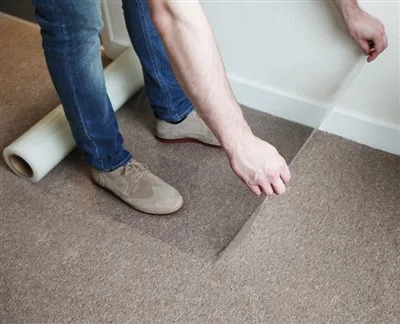
Auto Carpet Protection Film If you are in the market for reliable mirror safety backing or have any questions about how our products can help with thermal expansion management, please contact us for a free consultation. We look forward to the opportunity to discuss your requirements and work with you to find the best solution.
References
- Incropera, F. P., & DeWitt, D. P. (2001). Fundamentals of Heat and Mass Transfer. John Wiley & Sons.
- Askeland, D. R., & Phulé, P. P. (2011). The Science and Engineering of Materials. Cengage Learning.
- Baird, T. (2006). Understanding Glass Technology. Elsevier.
Haining Huanan New Material Technology Co., Ltd.
Haining Huanan New Material Technology Co., Ltd. is one of the leading mirror safety backing manufacturers and suppliers in China for over 20 years. We warmly welcome you to wholesale high quality mirror safety backing made in China here from our factory. For more cheap products, contact us now.
Address: NO. 5 BEIZHUANG EAST ROAD, HAINING ECONOMIC DEVELOPMENT ZONE, HAINING,JIAXING, ZHEJIANG,CHINA
E-mail: fiona@zj-hnhn.com
WebSite: https://www.hnhnfilms.com/
