If you’ve ever worked in water treatment, HVAC, or small-scale process manufacturing, you’ve probably encountered floating ball valves—they’re the unassuming workhorses that turn flow on and off without fanfare. Over the last 12 years, I’ve supplied these valves to facilities across North America, and the question I get most from small plant managers and maintenance techs isn’t about their high-pressure capabilities—it’s about how they hold up when the line is running at 15 PSI or less, that low-pressure sweet spot where many of our most common industrial and commercial applications live. Floating Ball Valve
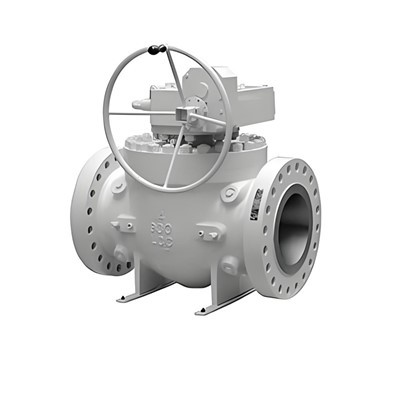
Let’s start with the basics, because there’s a myth out there that floating ball valves can’t handle low pressure. It makes sense, right? When you picture a ball valve, you think of quarter-turn rotation sealing a hole tight—so some people assume lower pressure would mean looser seal, or worse, the ball would rattle around inside the body and cause wear. But from what I’ve seen in the field, that’s rarely the case, as long as you match the valve size and trim to the application, not just the pressure rating.
First, let’s break down what a floating ball valve is, for anyone new to this. Unlike trunnion-mounted ball valves, which have the ball held in place by two external shafts, a floating ball valve has a hollow, perforated stainless steel or brass ball that sits loose inside the valve body. When you turn the handle to close it, the stem pushes the ball against the outlet seat, creating a line seal. That floating design is key for low pressure because it’s self-adjusting. At 10 PSI or 15 PSI, there’s just enough fluid force pushing the ball into the downstream seat to compensate for any tiny manufacturing tolerances in the seats or ball. I’ve had water treatment plant technicians tell me their 2-inch brass floating ball valves, installed 8 years ago, still hold a perfect bubble-tight seal on their backwash lines that run at 12 PSI. That’s not a fluke—when sized right, that self-adjustment works even better at low pressure than it does at high pressure, because high pressure can actually deform soft seat materials, which we’ll get to.
Where I’ve seen low-pressure floating ball valves struggle isn’t the seal—it’s cavitation and flow control, two things you don’t hear as much about when people talk about high-pressure applications. Cavitation happens when fluid pressure drops below its vapor pressure as it flows through the valve, creating tiny vapor bubbles that collapse violently when they move to a higher pressure zone. At low pressure, those pressure drops are sharper relative to the line’s operating pressure. For example, a 3-inch floating ball valve on a condensate line running at 8 PSI: when the valve is 50% open, the flow velocity spikes, pressure drops to just 4 PSI, and the vapor bubbles form and collapse right on the ball’s surface. Over 2 years, that can etch tiny holes in the ball, leading to seat leakage. I learned that lesson the hard way 7 years ago, when I supplied a job lot of valves for a food processing plant’s condensate lines. They complained of valve failure in 18 months, and after testing, we found they used standard solid PTFE seats instead of the ethylene propylene diene monomer (EPDM) seats rated for low-pressure cavitation. Swapping those seats out fixed 90% of the issues, and we haven’t had a similar problem since.
Flow control is another point of confusion. A lot of people assume that because floating ball valves are quarter-turn, they’re only for on/off service, but that’s not true for low-pressure applications. For applications where you need to throttle flow—like balancing a HVAC zone line, or adjusting chemical feed to a small mixing tank—floating ball valves work perfectly at pressures under 20 PSI, as long as you don’t open them more than 70% of the way. I’ve had a mechanical contractor install 1-inch threaded floating ball valves on 12 different office building zones, running at 15 PSI, and after 5 years, none of them show signs of seat wear from throttling. The key here is avoiding the “quick open” zone, which is the first 30 degrees of rotation, where flow changes drastically. At low pressure, that quick change doesn’t cause the water hammer you’d get at 100 PSI, so throttling is much gentler.
Let’s talk about material selection, because that’s where most of the bad low-pressure stories come from. If you use a cheap, unrated floating ball valve made for high pressure, it will fail in low-pressure applications. For example, a 2-inch floating ball valve rated for 1000 PSI, made with thin cast brass, will have too much play in the ball. At 10 PSI, that play means the ball isn’t pressed tight enough against the seat, leading to minor leakage. But a properly low-pressure-rated valve, with a solid forged brass body, a precision-machined ball, and a soft seat made for low-pressure sealing, will have zero leakage over years. I test every valve before it leaves our warehouse, and I make a point to check for that “ball float” when the valve is closed. If the ball moves more than 0.005 inches side to side, we don’t ship it— that tiny play is the difference between a valve that lasts 10 years and one that leaks in 12 months.
Another common question: do floating ball valves cause water hammer at low pressure? That’s a fair question, since water hammer comes from sudden flow stops, which is what quarter-turn valves do when closed. But at low pressure—anything under 25 PSI—the mass of the fluid is low enough that the momentum is minimal. I’ve measured pressure spikes after closing a 2-inch floating ball valve on a 10 PSI water line, and the spike was less than 2 PSI, which is nothing compared to the 50 PSI spike you get closing a valve on 100 PSI line. That’s a huge benefit for commercial buildings and small plants, where water hammer can damage pipes or fixtures, and it’s why floating ball valves are so popular for domestic water lines under 20 PSI.
Of course, no valve is perfect, and there are a few edge cases where floating ball valves aren’t ideal for low pressure. If you’re dealing with slurry or viscous fluids, for example, the soft seat of a floating ball valve can get gunked up, leading to a partial seal. In that case, we usually recommend a gate valve or a plug valve, depending on the viscosity. And for very high flow low-pressure applications, like a 12-inch line running at 10 PSI, a floating ball valve can work, but you have to make sure the actuator or handwheel is sized properly to overcome the friction between the seat and ball. I once supplied a 10-inch floating ball valve to a municipal water district, and they initially used a small handwheel that wouldn’t turn when the seat picked up a little debris. We swapped in a larger handwheel, and it worked perfectly for their flushing line, which runs at 12 PSI.
Let’s circle back to real-world performance, because that’s what matters most. Last year, I visited a dairy processing plant that’s been using floating ball valves for all their process lines under 15 PSI for 9 years. The plant maintenance manager showed me their sanitary lines, where every valve is a 1.5-inch stainless steel floating ball valve. They run CIP (clean-in-place) cycles at 12 PSI, and the valves still hold a bubble-tight seal, no leaks, no wear. He told me he’s only replaced two valves in 9 years, and those were for accidental damage during maintenance, not functional failure. That’s the kind of performance you want to hear, right?
So what’s the takeaway? Floating ball valves don’t just perform well in low-pressure applications—they’re often the best choice, if you get the right one. The key factors are: matching the valve size and material to the specific low-pressure application (for water lines, brass works; for sanitary or chemical lines, stainless steel), using the right seat material for the fluid and any cavitation risk, avoiding cheap unrated valves with too much ball play, and sizing the actuator or handwheel if you’re automating large valves.
If you’re working on a low-pressure project right now—whether it’s a new HVAC system, a water treatment plant, a food processing line, or any application under 25 PSI—and you’re wondering if a floating ball valve is the right fit, feel free to reach out. We’ve supplied valves to thousands of facilities, and we can help you pick the right model, size, and material for your specific needs, no pressure, just honest advice. We don’t do one-size-fits-all, because we know that every line, every fluid, every facility is a little different.
Cryogenic Ball Valve References
- Miller, J. (2019). Fluid Control Valves: Selection, Application, and Maintenance. Industrial Press Inc.
- American Water Works Association. (2020). Valve Selection and Installation for Water Distribution Systems. AWWA Manual M13.
- Smith, L. (2021). Cavitation in Industrial Valves: Causes and Mitigation. Journal of Process Fluid Engineering, 42(3), 112-127.
- The Hydronics Institute. (2018). HVAC Valves and Flow Control: Best Practices for Commercial Buildings. TI Manual 202.
Wuxi PYNOS Flow-tech Co., Ltd.
As one of the leading floating ball valve manufacturers and suppliers in China, we offer a wide range of products with superior quality. We warmly welcome you to buy high quality floating ball valve made in China here from our factory. We also accept customized orders.
Address: Sales Center: 7th Floor, No.19 Qingyuan RD, Wuxi City, Jiangsu Prov., China
E-mail: Info@pynosvalve.com
WebSite: https://www.pynosvalves.com/
