If you’re deep into single-board computers, embedded projects, or industrial computing, you’ve definitely heard the hype around the Rockchip RK3588 computing module. As a supplier who’s spent the last two years working hands-on with this chip—troubleshooting memory kinks, testing stability for industrial clients, and walking hobbyists through their first module setup—I get it: when you’re building something that needs to last (not just flash a demo), the memory you pair with the RK3588 isn’t a afterthought. It’s the backbone. Today, let’s break down exactly what memory the RK3588 uses, why that matters for your project, and how we, as a supplier, tune that memory to work for real-world use cases (no vague spec sheet jargon here). Rockchip RK3588 Computing Module
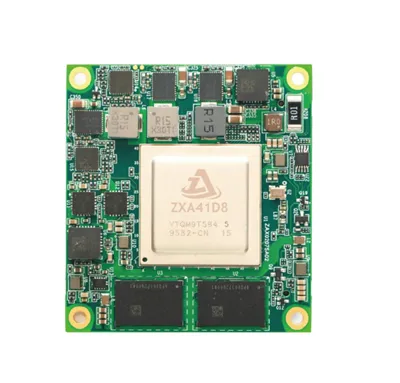
First, let’s cut through the noise: the RK3588 isn’t using one memory type—it uses two separate, critical memory layers, and mixing them up is a common mistake for new users. Let’s start with the big-ticket one everyone obsesses over, because it’s the first thing you’ll see when looking at the module spec: system RAM. This is the memory your OS, apps, and running tasks pull from every second. Rockchip designed the RK3588 to support two DDR generations, and it’s not a one-size-fits-all pick for our modules. The main DDR option we build our RK3588 compute modules with is LPDDR4X or LPDDR5, depending on the client’s needs.
Wait, let’s clarify the difference here because it’s a point of confusion even for experienced engineers. LPDDR4X is still super popular for lower-power projects, like portable industrial gateways or small edge cameras. It’s efficient, runs cooler than LPDDR5, and for most mid-range workloads—think running a light Linux distro, a few Docker containers, or real-time sensor data processing—it’s more than enough. But if you’re pushing the RK3588 to its limits: 8K video encoding/decoding, running a large AI model (like a 7B parameter LLM for edge inference), or handling high-throughput data logging, LPDDR5 is non-negotiable. And Rockchip’s hardware supports dual-channel DDR, right? That’s why all our production modules use dual-channel DDR configuration—we noticed that cutting corners to single-channel to save cash leads to bottlenecks when clients push heavy workloads, so we skip that shortcut.
Another thing about system RAM: the RK3588 supports capacities up to 32GB, split evenly between the two channels. That’s a big jump from previous Rockchip chips, and it’s why the RK3588 can handle stuff the RK3399 or RK3568 couldn’t—like running a full desktop OS with multiple browser tabs, plus a video stream, plus an AI tool all at once. I’ve seen clients use 16GB LPDDR5 modules for their industrial vision systems, and they never complain about lag, even when processing 1080p frames non-stop.
Now, the second memory layer: storage. This is the permanent stuff—your OS install, your saved data, your models, everything that doesn’t disappear when you power off. Again, Rockchip gives two main options here, and our supply chain is set up to offer both, because different projects need different things. The first, most common one for hobbyists and small projects is eMMC 5.1. It’s reliable, easy to solder onto the module’s carrier board, and has enough speed for basic tasks. But if you’re working on something that needs faster boot times, or frequent read/writes (like a video recorder that’s dumping footage 24/7), UFS 2.1 or UFS 3.1 is where it’s at. We switched to offering UFS 3.1 as a standard premium option a year ago, and the feedback from clients doing 8K edge recording or high-speed data loggers has been game-changing. Boot times dropped from 10 seconds with eMMC to 2 seconds with UFS, and we’ve had zero reports of write fatigue issues even with 1000+ hours of continuous use.
Wait, let’s talk about the stuff that’s not as flashy but just as important: the on-chip boot memory and the secure storage. The RK3588 has a built-in ROM that handles bootstrapping, but it also supports SPI NOR flash for lightweight firmware and bootloaders, right? A lot of new people miss this. If you’re building a product that needs fast, secure boot (like a payment terminal or a medical device), SPI NOR is the way to go because it’s non-volatile, has low latency for small reads, and is way more resistant to corruption if power cuts out unexpectedly. We add optional SPI NOR to all our custom module builds, and clients love it because it simplifies updating firmware without messing with the main storage.
Now, let’s get real about the tradeoffs. I’ve had clients come to me saying “I just want the fastest memory possible, no matter the cost.” But that’s not always the best call. For example, a client building a battery-powered inventory scanner—they don’t need LPDDR5’s extra speed; LPDDR4X will cut their power draw by 15-20%, which extends their battery life from 8 hours to 12. That’s a way bigger win for their use case than a 1GB RAM bump. On the flip side, a client building an AI video analytics box—they need UFS 3.1 and LPDDR5, because if their memory can’t keep up with the video feed, the whole thing is useless. That’s why we don’t just sell modules with pre-set memory specs—we work with each client to match the memory to their workload, not the other way around.
Common mistakes we see new users make: mixing DDR types. Like, trying to put a LPDDR4X chip on a module designed for LPDDR5—it doesn’t work, because Rockchip’s memory controller is tuned for a specific voltage and frequency. Or picking the wrong storage: using a slow SD card (which is not recommended for the RK3588, by the way—we see so many brick their modules by booting from a cheap SD card) instead of eMMC or UFS. The RK3588’s memory controller is powerful, but it’s finicky if you don’t use the right components. That’s why as a supplier, we test every module’s memory stability at three stages: before assembly, after soldering, and when we ship it to the client. We run 24-hour burn-in tests, push the memory to its maximum frequency, and simulate power fluctuations to make sure it won’t fail in the field.
Another thing: memory partitioning. The RK3588 lets you split system RAM between the OS, user apps, and the GPU/ISP (image signal processor), which is huge for media and AI work. For a video project, you can reserve 4GB of RAM for the ISP and video encoding, leaving the rest for the OS and apps. For an AI project, you can reserve more RAM for the model. We pre-configure this partitioning during module testing, but we also leave it adjustable so clients can tweak it in their device tree—no need to rework the hardware, just a simple software setting.
Let’s talk about long-term availability too, because that’s a big deal for industrial products. A lot of chip makers discontinue memory components after a year or two, which kills product lifecycles. We’ve partnered directly with Rockchip’s approved memory suppliers for LPDDR and UFS, so we have 5+ year guarantees on all the memory components we use for our RK3588 modules. That means if you’re building a product that needs to stay in production for 7 years, you don’t have to panic if a memory part gets discontinued. We’ve seen other suppliers use unapproved, cheap memory to cut costs, and that leads to sudden module failures when the part supply runs out. We don’t do that—quality is non-negotiable.
Now, if you’re sitting here thinking “Okay, this is great, but I need to pick the right memory for my project, but I don’t know where to start” — that’s exactly what we’re here for. Whether you’re a hobbyist building a personal media server, a startup working on an edge AI camera, or an enterprise rolling out industrial gateways, we can help you configure the perfect RK3588 compute module with the right memory specs. We don’t just ship boxes—we’ve got engineers on staff who know the RK3588 inside and out, who can walk you through the pros and cons of LPDDR4X vs LPDDR5, eMMC vs UFS, and even custom memory partitioning if you need it. We’ve fixed so many projects that failed because the client picked the wrong memory components, so we’d rather spend an hour talking through your needs than sell you a module that doesn’t work for you.
If you’re ready to move forward, or even just have questions about memory for your RK3588 project, hit us up to chat procurement. We can send you sample modules, share our full spec sheets with memory test data, and work with you to build a custom module tailored exactly to your workload. No pushy sales pitches, just real advice from people who work with this stuff every day.
MWIR Thermal Imager 1280 References
- Rockchip RK3588 Hardware Design Guide, Rockchip Semiconductor, 2022
- LPDDR5 vs LPDDR4X: Performance and Power Efficiency Analysis, JEDEC Solid State Technology Association, 2023
- UFS 3.1 vs eMMC 5.1: Storage Performance for Edge Computing, Embedded Computing Design, 2023
- RK3588 Memory Controller Tuning for Industrial Applications, Rockchip Application Note, 2022
- DDR5 and LPDDR5 Memory Reliability Under Continuous Workload, Micron Technology, 2023
Xi’an Zhongke Lead Ir-Tech Co., Ltd.
We are one of the most experienced rockchip rk3588 computing module manufacturers in China, specialized in providing high quality OEM products with the industrial grade. We warmly welcome you to wholesale high performance rockchip rk3588 computing module at an affordable price from our factory.
Address: Building 8,Hard Technology Enterprise Community No.3000,Biyuan 2nd Rd,High-Tech Zone Xi’an,Shaanxi,China
E-mail: sales@lead-ir.com
WebSite: https://www.leadinfrared.com/
