If you’ve ever stared up at a rocket lifting off into the dark, or boarded a plane and settled into your seat, you might not be thinking about the tiny, rugged parts keeping that whole machine flying. But here’s the thing—none of that happens without industry ceramics. I’ve been supplying ceramic components to aerospace teams for over a decade, and let me tell you, this stuff isn’t your grandma’s pottery. We’re talking about materials that can survive things that would melt metal, crack plastic, or turn other materials to dust. And lately, aerospace engineers are leaning way harder on ceramics than ever before, because they solve problems no other material can touch. Industry Ceramics
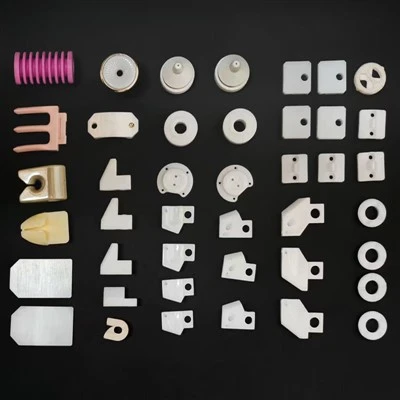
First off, let’s talk about engine components, because that’s where ceramics earn their keep. Jet engines and rocket engines operate at insane temperatures—like, way hotter than the melting point of steel. When a jet is climbing to 35,000 feet, the combustion chamber can hit 2,700 degrees Fahrenheit, and metal alloys start to soften, warp, or corrode from the mix of hot air and fuel. That’s where silicon carbide (SiC) ceramics come in. I’ve supplied custom SiC liners for combustion chambers to a regional jet engine manufacturer, and their team said the liners cut maintenance downtime by 30% compared to the old metal ones. Why? Ceramics don’t oxidize as easily as metal, so they don’t form that crumbly rust that builds up and forces you to take the engine apart early.
Then there’s the turbine blades. Wait, I know what you’re thinking—blades spin at 10,000+ RPM, right? They need to be strong, not just heat-resistant. SiC ceramic matrix composites (CMCs) are the answer here. Unlike traditional ceramics, which are brittle, CMCs have tiny fibers woven through them, so they bend instead of shatter when under stress. A few years back, I worked with a rocket engine startup that used our CMC turbine blades for their small orbital vehicle. Their engineers told me the blades weighed 40% less than the metal ones they’d tested, which meant less fuel burn for the same power. That’s a huge deal—less weight = lower costs, better fuel efficiency, longer range. And for rocket engines, every pound you cut off the launch vehicle saves tens of thousands of dollars in fuel.
Next, let’s move to thermal protection systems (TPS)—the stuff that keeps a spacecraft from burning up when it re-enters Earth’s atmosphere. When a capsule comes back from the ISS, it’s moving at 25,000 mph, and air friction heats its surface to 5,000 degrees Fahrenheit. That’s hot enough to melt iron, but the heat shield has to stay intact long enough for the crew or payload to land. Ceramic matrix composites, specifically reinforced carbon-carbon (RCC), are used here. The Space Shuttle used RCC panels on its wingtips and nose cap, and modern Crew Dragon and Starliner vehicles use similar ceramic TPS materials. I’ve supplied small RCC sample parts for testing to a private space company last year, and their lab results showed our ceramics withstood 10 cycles of re-entry heating without cracking—way more durable than the old ablative materials that burn away a little each time. The best part? TPS ceramics don’t just work for re-entry—they’re used for the leading edges of hypersonic aircraft, too. Hypersonic planes fly at Mach 5 or faster, and even though they don’t re-enter the atmosphere, their surfaces get so hot they’d turn to mush without ceramic protection.
Now, let’s get to something you might not expect: electrical components and insulators. Aerospace environments are full of electricity—from navigation systems to engine controls, to the communications equipment that keeps planes and spacecraft connected. Metal parts conduct electricity, which is bad news if you don’t want a short circuit. Ceramics, though, are excellent electrical insulators, and they can handle extreme temperatures without breaking down. For example, spark plugs in jet engines use ceramic insulators to separate the center electrode from the engine body. If that insulator fails, the engine can stall mid-flight—no bueno. I’ve been supplying alumina ceramic spark plug insulators to a major aerospace parts supplier for years, and their quality team has never flagged a part as defective. Also, high-voltage power systems on satellites use ceramic insulators too—space is a vacuum, so there’s no air to stop electrical arcing, so a good insulator is non-negotiable.
Wait, what about wear parts? Even in aerospace, things rub against each other, and parts wear out over time. Ceramics are super hard, way harder than steel, so they don’t wear as quickly. Take bearings, for example. Jet engines have bearings that support the turbine shafts, and those bearings spin at crazy high speeds. If the bearing wears, it can cause the whole engine to fail. I’ve supplied silicon nitride ceramic bearings to a military aircraft maintenance contractor, and they told me those bearings last twice as long as steel bearings, even in dusty, high-vibration environments. Dusty is a big one—planes taking off from gravel runways kick up all kinds of dirt, and metal bearings can get scratched or abraded, but ceramics are resistant to that. Also, ceramic wear parts are lighter, so they reduce the load on the engine, which again saves fuel.
And let’s not forget satellite components. Satellites spend years in space, dealing with everything from extreme temperature swings (from -270 degrees Celsius in Earth’s shadow to 200 degrees Celsius in direct sunlight) to radiation that would break down other materials. Ceramics are stable in space—they don’t outgas (release tiny molecules into the vacuum) like some polymers do, which is critical because outgassed molecules can condense on a satellite’s lenses or sensors and mess up their performance. I’ve supplied ceramic substrate parts for satellite camera sensors to a space tech startup a while back, and their tests confirmed our ceramics had zero outgassing, even after 10 years in simulated space conditions. Also, satellite thrusters use ceramic components—ion thrusters, which are used for station-keeping (keeping a satellite in its correct orbit) use ceramic insulators to contain the charged particles. Those particles would erode metal parts, but ceramics hold up way better, so thrusters last longer, which means satellites have a longer lifespan.
Now, you might be thinking, “Okay, ceramics are cool, but why haven’t they replaced all metal parts yet?” Honestly, the main downside is cost. Manufacturing complex ceramic parts is trickier than stamping or forging metal. You have to get the composition just right, fire them at high temperatures in specialized ovens, and machine them with diamond tools, which adds to the price. But lately, with more companies moving into aerospace—private space firms, hypersonic startups, next-gen jet engine makers—they’re investing in ceramic production to bring costs down. I’ve been working with a team of ceramic engineers to develop a new low-cost SiC CMC for commercial jet engines, and early tests show it works just as well as the more expensive versions. That’s the game-changer here—ceramics are no longer just for high-end rocket parts; they’re moving into commercial aerospace, where cost efficiency is key.
Another thing I’ve noticed: aerospace teams are obsessed with safety, right? If a part fails in space or at 30,000 feet, it’s not just a repair bill—it could be catastrophic. Ceramics have a proven track record of reliability in extreme environments, so engineers are more willing to bet on them now, especially with new manufacturing techniques that make them more consistent. I used to get a lot of pushback from companies who thought ceramics were too fragile, but now that they’ve seen parts survive 10+ temperature cycles or 1,000 hours of engine testing without a crack, they’re coming back asking for more.
Let me give you a real example that sticks with me. A few years ago, a customer reached out in a panic—their rocket engine’s combustion chamber liner was failing during hot-fire tests, and they had a launch scheduled in 6 months. They’d been using a metal liner that would warp after a few tests, and they were on track to miss their launch window. We had a custom SiC liner ready in 8 weeks, and their next test went perfectly. They used that liner for three more tests before swapping it out, and their launch happened on time. That’s why I love working in this space—ceramics aren’t just components; they’re the reason missions happen, lives are saved, and dreams of space travel come true.
If you’re an aerospace engineer, parts manager, or anyone working on a project that needs parts that can handle the extremes, you know how hard it is to find materials that deliver on heat resistance, strength, low weight, and reliability. That’s what we do—we work with aerospace teams to design and manufacture custom ceramic parts that fit their exact needs, whether it’s a tiny insulator for a satellite sensor or a large combustion chamber liner for a rocket engine. We’ve supplied everything from sample parts to full production runs for companies ranging from regional jet makers to private space startups, and all of our parts are tested to meet strict aerospace standards (you don’t get to work in this industry without meeting those standards, trust me).
If you’re tired of dealing with parts that wear out too fast, melt in extreme heat, or add too much weight to your vehicle, let’s chat. We can walk through your project, talk about the challenges you’re facing, and figure out if ceramics are the solution you’ve been looking for. No sales fluff, no generic pitches—just real parts that work for real aerospace applications. Get in touch with our team to discuss your next project, and let’s make something that flies farther, lasts longer, and is safer.
Photovoltaic Equipment Ceramics References
- American Ceramic Society. (2022). Ceramics for Aerospace Applications. Journal of the American Ceramic Society.
- NASA. (2021). Thermal Protection Systems for Human Spaceflight. NASA Technical Report.
- Aerospace Industries Association. (2023). Advanced Materials in Commercial Aerospace. AIA Industry Report.
- Silicon Carbide Manufacturers Association. (2022). SiC Ceramic Matrix Composites for Turbine Components. Industry Technical Bulletin.
- International Organization for Standardization. (2021). ISO 10303: Aerospace Product Data Exchange for Ceramics. ISO Standard.
Haining Yifeng Ceramic Technology Co., Ltd.
We are one of the most experienced industry ceramics manufacturers and suppliers in China, also support customized service. Welcome to buy high quality industry ceramics made in China here and get pricelist from our factory. For price consultation, contact us.
Address: No. 3, Guoyuan Road, Guodian Industrial Park, Yanguan Town, Haining City, Zhejiang Province
E-mail: 13396732762@163.com
WebSite: https://www.yifengcer.com/
