As a supplier in the DC motor industry, I get asked a lot of technical questions. One query that pops up quite often is “What is the dynamic braking of a DC motor?” Well, let me break it down for you in plain English. DC Motor
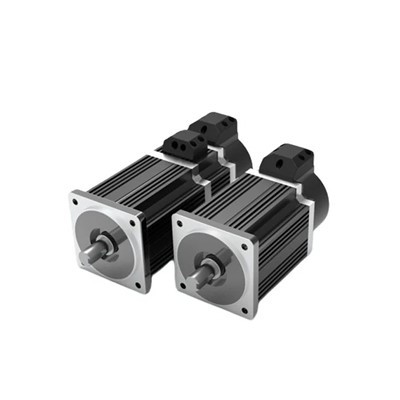
First off, you need to know what DC motors are all about. DC motors, as the name suggests, run on direct current. They’re used in a ton of applications, from electric cars and industrial machinery to household appliances. What makes them so great is their simplicity and the ease with which you can control their speed and torque. And that’s where dynamic braking comes in.
How Does Dynamic Braking Work?
Dynamic braking is a method used to slow down a DC motor quickly. It’s like hitting the brakes on your car but for a motor. Here’s the basic principle. When you’re running a DC motor, it’s converting electrical energy into mechanical energy. The motor spins, and that spin is what powers the machine it’s attached to.
But when you want to stop the motor, instead of just cutting off the power, dynamic braking takes a different approach. It turns the motor into a generator. Sounds cool, right?
When you activate dynamic braking, you disconnect the power source from the motor. At the same time, you connect a resistor across the motor terminals. Now, because the motor has inertia, it keeps spinning for a bit. As it spins, it now acts as a generator. The rotating armature in the magnetic field of the motor creates an induced electromotive force (EMF). This induced EMF causes a current to flow through the connected resistor.
As the current flows through the resistor, it dissipates energy in the form of heat. This energy dissipation is what slows down the motor. The more energy that’s dissipated, the faster the motor stops.
Think of it like this. You’ve got a spinning top. When you put your hand on it, the friction between your hand and the top slows it down, right? The energy from the spinning top is transferred to your hand as heat. In a DC motor with dynamic braking, the resistor is like your hand, and the motor is the spinning top.
Why Use Dynamic Braking?
There are several good reasons to use dynamic braking in DC motors.
-
Quick Stopping: The most obvious reason is that it allows the motor to stop much faster than just cutting off the power. In applications where you need rapid stops, like in conveyor belts or elevator systems, dynamic braking is a must. You don’t want the conveyor belt to keep moving after you’ve turned it off. It could cause misalignment of products or even an accident. And in an elevator, a quick and smooth stop is crucial for passenger safety.
-
Safety: It makes the operation of machinery safer. When a motor stops suddenly, there’s less chance of the equipment going out of control. For example, in a machine tool, if the motor doesn’t stop quickly, the cutting tool could keep moving and damage the workpiece or even injure the operator.
-
Wear and Tear Reduction: Mechanical brakes wear out over time. Every time you apply a mechanical brake, there’s friction between the brake pads and the braking surface, which causes wear. With dynamic braking, there are fewer mechanical parts involved in the stopping process, which means less wear and tear on the motor and associated equipment. This can save you a lot of money on maintenance and replacement parts in the long run.
Types of Dynamic Braking
There are a couple of different types of dynamic braking, and the choice depends on the specific application.
Rheostatic Braking: This is the most common type. As I mentioned earlier, you connect a resistor across the motor terminals when you want to stop the motor. The resistor is usually sized to handle the amount of energy that needs to be dissipated. The value of the resistor affects how quickly the motor stops. A lower resistance will allow more current to flow, which means more energy is dissipated and the motor stops faster. But you’ve got to be careful not to choose a resistor that’s too small, or it could overheat.
Plugging: Plugging is a bit different. Instead of just connecting a resistor, you reverse the polarity of the voltage applied to the motor. This creates a torque that acts in the opposite direction to the rotation of the motor, quickly bringing it to a stop. However, plugging can be a bit hard on the motor because it causes a large current to flow through it. So, it’s not used as often as rheostatic braking, especially in high-power applications.
Our DC Motors and Dynamic Braking
As a DC motor supplier, we understand the importance of dynamic braking. That’s why we offer motors with built – in dynamic braking capabilities. Our motors are designed to work efficiently with dynamic braking systems, whether it’s rheostatic or plugging.
We can customize the dynamic braking features based on your specific needs. If you’re in an industry where quick stops are essential, like the automotive manufacturing or the material handling industry, we can provide motors with optimized resistance values for the fastest possible stops. And if you’re concerned about energy efficiency, we can work on reducing the energy loss during the braking process.
Our engineering team has years of experience in designing DC motors with dynamic braking. We use high – quality materials in our motors to ensure durability and reliability. The resistors we use in our dynamic braking systems are carefully selected to handle the heat generated and provide consistent performance.
Conclusion
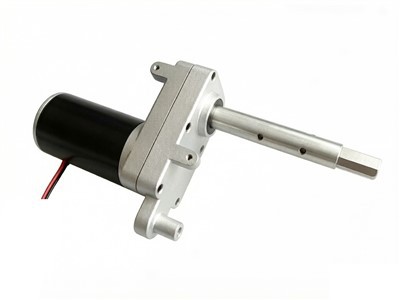
To sum it up, dynamic braking in a DC motor is a nifty way to stop the motor quickly and safely. It turns the motor into a generator, dissipating energy through a resistor to slow down the rotation. Whether you’re using a conveyor belt, an elevator, or a machine tool, dynamic braking can improve the performance and safety of your equipment.
DC Motor If you’re in the market for DC motors with dynamic braking capabilities, we’d love to chat with you. We’ve got the expertise and the products to meet your requirements. Reach out to us, and let’s discuss how we can help you with your motor needs.
References
- Fitzgerald, A. E., Kingsley, C., & Umans, S. D. (2003). Electric Machinery (6th ed.). McGraw – Hill.
- Chapman, S. J. (2012). Electric Machinery Fundamentals (5th ed.). McGraw – Hill.
Zibo Auric Mechanical and Electrical Technology Co., Ltd.
As one of the leading dc motor manufacturers and suppliers in China, we warmly welcome you to buy advanced dc motor for sale here from our factory. All customized motors are with high quality and competitive price.
Address: B419, High-tech Entrepreneurship Park, High-tech Zone, Zibo City
E-mail: cui@auricmotor.com
WebSite: https://www.auricmotor.com/
