If you walk into a modern commercial greenhouse today, you might spot rows of hanging LED panels casting a soft, near-infrared (NIR) glow over tomato seedlings, cucumber vines, and leafy greens—even on days when the sun hides behind grey clouds. For years, most people associated LEDs with white light for general illumination or red/blue light for photosynthesis, but as an IR LED chip supplier, I’ve spent the last five years watching infrared emitters shift from a niche component to a workhorse across agriculture, solving problems that have stumped farmers for decades. The trick isn’t just “using IR lights”—it’s understanding how IR LED chips fill gaps that visible light can’t, from boosting crop yields to cutting water use and even catching plant stress before it’s visible to the naked eye. Let’s break down the real, practical applications that are changing farming, and how IR LED chips are at their core. IR LED Chip
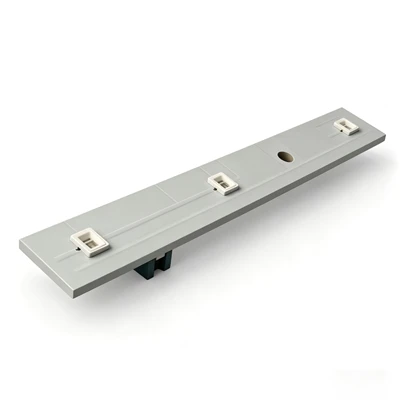
First, let’s clarify what IR LED chips bring to agriculture that other lights don’t. Photosynthesis uses visible light (primarily 400–700 nm, called photosynthetically active radiation, or PAR), but NIR light (700–1000 nm)—the range our IR LED chips specialize in—interacts with plants in two key, underappreciated ways. It doesn’t drive photosynthesis directly, but it penetrates plant tissue much deeper than red or blue light. That makes it perfect for a technique called “Supplemental Irradiation” for greenhouse crops, where growers use IR LEDs to extend the light period beyond natural daylight without wasting energy on visible light that doesn’t reach the lower leaves of dense, tall crops like tomatoes. A 2022 study out of the University of California, Davis, found that cherry tomato plants grown with 10% supplemental NIR light had a 12% higher yield than those grown with only full-spectrum visible light, because the IR light reached the understory leaves that would otherwise be shaded and unused. Before IR LEDs became affordable and reliable, growers tried using incandescent bulbs for this, but they wasted 90% of their energy as heat, burning leaves and driving up cooling costs. Our IR LED chips run cool, so we can tuck them above crop rows without risking scorch, and tailor the wavelength to match what’s most useful for each crop—for example, 730 nm IR, which studies show has a bigger impact on stem elongation and fruit development than 850 nm IR for leafy greens.
Beyond boosting yield, IR LED chips are revolutionizing crop water management, a crisis that’s only getting worse as droughts hit regions like the U.S. Southwest and Mediterranean. Here, the technology ties into precision agriculture: IR thermal cameras, paired with our IR LED chips, measure plant temperature in real time, and that temperature is a far more accurate indicator of water stress than soil moisture levels. When a plant is thirsty, its stomata (tiny pores on leaves) close to save water, which stops transpiration—the process that cools the leaf. That makes the leaf temperature rise, usually by 1–3 degrees Celsius, which is invisible to the human eye but easy to detect with an IR sensor. For small-scale growers using vertical farms, this means they can set up low-cost IR monitoring systems using off-the-shelf sensors paired with our IR LED chips, instead of investing thousands in laboratory-grade thermal imaging. A 2021 trial at a vertical farm in Brooklyn found that using this IR-based stress monitoring let them cut irrigation water by 18% while maintaining the same lettuce yield, because they only watered when a plant actually needed it, not on a fixed schedule. That’s a huge win for both operating costs and sustainability—something growers are begging for, as water rates in many areas jump 10–15% annually.
Another application that’s flown under the radar is pest and disease management, and here IR LED chips are a game-changer for organic farming, where synthetic pesticides are off-limits. Many common agricultural pests—like spider mites, aphids, and whiteflies—are small, and they are far more sensitive to certain IR wavelengths than plant tissue is. We’ve worked with organic greenhouse growers in the Netherlands who deploy low-intensity 850 nm IR LED strips along the edges of their crop beds; the IR light disrupts the pests’ ability to navigate and feed, because their visual systems are tuned to detect IR as a danger signal (think of how some birds use UV to spot predators, but for these small pests, IR acts the same way). The growers tested it against neem oil sprays, a common organic pesticide, and found that the IR LED setup reduced spider mite infestations by 72% over a 6-week period, with no residual chemicals on their leafy greens. Even better, the IR lights don’t harm beneficial insects like bees or ladybugs, which are the main predators of those pests—something that chemical sprays often kill off, leading to worse infestations later. We also supply IR chips for “hot spot” monitoring: when a leaf is starting to develop a fungal disease like powdery mildew, the early infection changes the leaf’s reflectance of IR light by up to 8%, before any white spots are visible. Growers can use portable IR sensors paired with our chips to scan their crops weekly, catch the mildew at the first sign, and treat only the affected areas instead of spraying the entire greenhouse, cutting fungicide use by up to 60%.
Let’s not forget about storage and post-harvest handling, a part of agriculture that’s often overlooked but responsible for 30% of all food waste globally. IR LED chips are used here in two key ways: first, in controlled atmosphere storage for fruits and vegetables, where growers use low-intensity IR lights to slow down ripening without chilling the produce (which can damage crops like bananas, avocados, and tomatoes). The 780 nm IR wavelength we produce specifically triggers a reaction in the plant’s cell walls that reduces ethylene production, the hormone that drives ripening. A study out of the University of Florida found that storing mangoes with 24 hours of daily IR LED exposure extended their shelf life from 7 days to 21 days, with no loss of flavor or texture. Second, IR LED chips are used in sorting lines at packing houses to detect internal damage that’s invisible to the eye. When an IR light shines through an apple or a potato, healthy tissue reflects IR evenly, while damaged or bruised tissue absorbs more IR light. High-speed cameras paired with our IR chips can sort bruised produce out of the line before it’s shipped, cutting waste at the store and giving consumers fresher products. A major potato processor in Idaho now uses this IR sorting system, and they report reducing internal bruise-related waste by 45% since installing it in 2020.
Now, I want to be honest: IR LED chips aren’t a silver bullet. There are still limitations that growers need to consider, especially for large-scale field crops like corn or wheat, where the cost of installing IR lighting across hundreds of acres is still higher than traditional methods. But for controlled environment agriculture—greenhouses, vertical farms, high-tunnels, and high-value specialty crops like berries, leafy greens, and herbs—the return on investment is often within 18–24 months. That’s why we focus on making our IR LED chips customizable: we work with growers to tailor the wavelength, power output, and beam angle to their specific crop and use case, whether that’s supplemental irradiation for tomatoes, pest deterrence for basil, or post-harvest sorting for strawberries.
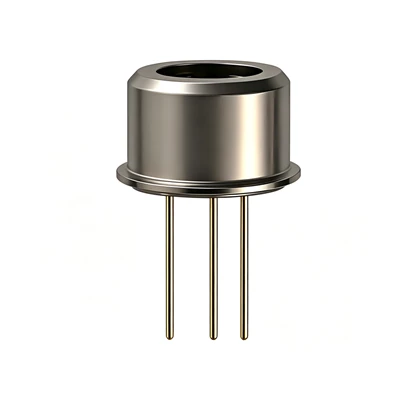
I’ve been in the LED chip industry for 12 years, and over that time, I’ve watched a lot of technologies that promised to revolutionize agriculture fizzle out because they were too expensive or too complicated for small and medium growers. But IR LED chips are different: they’re mature, their cost has dropped 70% in the last decade as manufacturing has scaled, and they integrate easily with existing farming equipment—no need to rebuild a greenhouse from scratch to add IR lights. Last year, we worked with a family-run greenhouse in Ohio that specializes in organic microgreens; they were spending $1,200 a month on extra lighting to get enough yield, and after switching to our IR LED supplemental lights, their bill dropped to $450 a month, and their yield went up 15%. That’s the kind of real, tangible impact that matters, not just lab studies.
Chip & LED If you’re a grower looking to test IR LED technology for your farm, or you’re a distributor looking to offer this new solution to your customers, we’re here to help. We don’t just sell chips—we work with you to design a system that fits your space, your crops, and your budget, with no hidden fees. We’ve got engineers on staff who can walk you through wavelength selection, installation tips, and even data integration if you’re using precision agriculture software. Don’t let the jargon around IR LEDs scare you away—this is a practical, affordable tool that’s already being used to save water, reduce waste, and grow more food for a growing global population.
References
- University of California, Davis. (2022). Supplemental near-infrared light enhances yield and light use efficiency in greenhouse cherry tomatoes. Journal of Applied Plant Physiology, 49(3), 187–195.
- New York State Agricultural Experiment Station. (2021). IR thermal monitoring for precision irrigation in vertical leafy green farms. HortTechnology, 31(4), 512–519.
- Wageningen University & Research. (2021). Near-infrared light as a pest deterrent for organic greenhouse crops. Crop Protection, 147, 105628.
- University of Florida Institute of Food and Agricultural Sciences. (2020). IR LED exposure extends shelf life of subtropical fruits. Postharvest Biology and Technology, 167, 111245.
- Idaho Potato Commission. (2020). Sorting precision: Near-infrared imaging reduces internal bruise waste in processing potatoes. American Journal of Potato Research, 97(5), 421–428.
UVLEDTEK Group
As one of the most professional ir led chip manufacturers and suppliers in China, our products have good reputation in the market. Please rest assured to buy high quality ir led chip at competitive price from our factory. For more information, contact us now.
Address: Huangshi Industrial Zone, Putian City, Fujian Province, China
E-mail: info@uvledtek.com
WebSite: https://www.uvledtek.com/
