When I first started working as a spindle technician for an aluminum profile drilling machine supplier, I remember a customer coming to us frustrated. His new machine was causing inconsistent hole sizes on 6061 aluminum extrusion—some drilled clean, others had rough edges, and a few even bent the bit. After going through his setup, I found the spindle torque was set too high for the soft aluminum he was working with. That moment stuck with me because it’s one of the most common, yet most misunderstood, adjustments for anyone running or maintaining this type of equipment. Aluminum profile drilling machines rely on precise spindle torque to balance speed, bit life, and hole quality, and getting that setting right can mean the difference between a production line that runs smoothly and one that costs you time and money. Aluminum Profile Drilling Machine
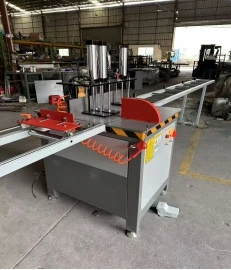
First, I need to clarify what spindle torque actually is in this context. For aluminum profile drilling machines, torque is the rotational force the spindle applies to the drill bit to turn it against the aluminum. Unlike steel, which requires high torque to cut through hard material, aluminum is softer and more prone to heat buildup and material deformation. Too much torque, and the bit will bind—you’ll see it wander, or the aluminum will stretch around the hole, ruining the profile’s structural integrity. Too little torque, and the bit will slip, leading to uneven cuts, broken bits, and longer cycle times as you have to re-drill holes.
The first step to adjusting torque is understanding your machine’s specifications and the aluminum material you’re working with. Not all aluminum profiles are the same. 6061-T6, the most common extrusion for windows, doors, and structural framing, has a tensile strength of around 31,000 psi, while 6063 is softer at about 14,000 psi. Thicker profiles also need different torque settings than thin ones because the material has more mass to cut through. Our company’s machines come with a torque chart specific to our models, but I always tell customers to use that as a starting point, not a rule. For example, a 10mm twist drill bit on a 5mm thick 6063 aluminum profile might need a torque setting of 12 Nm, but the same bit on 10mm thick 6061-T6 would need 18 Nm. That variation is why you can’t just set it and forget it—you have to test.
Next, how do you actually access and adjust the spindle torque on most modern aluminum profile drilling machines? Our machines use either a digital torque controller or a manual adjustment knob paired with a tachometer. For the digital models, you can navigate to the spindle settings menu on the control panel, where you’ll see a torque value in Newton-meters or inch-pounds (we use both units depending on the customer’s region). For older manual models, you’ll need to loosen the lock nut on the spindle’s torque adjustment mechanism and turn the adjuster screw: clockwise increases torque, counterclockwise decreases it, and always re-tighten the lock nut once you’re done. I always recommend turning off the machine and unplugging it before making any mechanical adjustments—safety is non-negotiable here, especially when dealing with spinning parts and sharp drill bits.
Once you have the basic setting in place, the next step is test drilling on scrap material. This is where most customers skip the important step, and that’s where mistakes happen. Take a piece of the same aluminum profile you’ll be using for production, set it in the machine’s fixture (it’s critical that the profile is securely clamped—loose material will skew the torque reading), and drill a test hole. After drilling, inspect three things: the edge of the hole, the bit’s condition, and the drill’s cycle time. If the hole has burrs that are hard to remove, or the bit looks worn after just a few test holes, your torque is too high. When torque is too high, the bit generates excess heat because it’s forcing too much material at once—aluminum has a low melting point, so that heat can not only damage the bit but also cause the profile to warp, which is a big problem for applications like window frames that need to fit together precisely.
If the hole is uneven, or the bit slips as it starts cutting, your torque is too low. I once had a customer who was drilling a series of 8mm holes on 6063 profiles, and he kept getting holes that were 1mm off-center. When I checked his torque, it was set to 8 Nm—way too low. Cranking it up to 14 Nm fixed the issue immediately because the bit had enough rotational force to bite into the aluminum without slipping. Another sign of too little torque is longer cycle times; if the drill is taking 20% longer than the machine’s rated speed to complete a hole, that’s a clear indicator the torque is mismatched.
There are also a few secondary factors that affect spindle torque, so you can’t ignore those. Drill bit type is a big one. For aluminum, you want to use a high-speed steel (HSS) bit with a split point, or a carbide-tipped bit for thicker profiles. Carbide bits are harder, so they can handle slightly higher torque without wearing out, while HSS bits need a more conservative setting to avoid overheating. The bit’s diameter matters too: larger bits require more torque because they’re removing more material, while smaller bits (under 5mm) are more delicate, so you want lower torque to prevent breakage. I always tell customers that for bits smaller than 5mm, stick to 80% of the torque you’d use for a 10mm bit of the same type.
Spindle speed is another linked factor. Torque and speed have an inverse relationship—at a given power output, higher speed means lower torque, and vice versa. That means you can adjust torque by changing either the torque setting or the spindle speed, but for aluminum, we prefer to adjust torque first because it gives more consistent results. For example, if you set your spindle to 2,000 RPM, your torque should be lower than if you set it to 1,000 RPM. If you’re working with thin, soft aluminum, you can run a slightly higher spindle speed and lower torque to reduce heat buildup, which is better for both the bit and the profile.
Maintenance also plays a role in consistent torque over time. If your spindle is dirty, or the drive belt is worn, the torque reading will be inaccurate. We recommend cleaning the spindle’s mounting area every month, and checking the drive belt tension every three months—loose belts can slip, making it seem like your torque is lower than it actually is, which can lead you to crank up the setting too high and cause damage. If you notice that torque settings are changing randomly during production, it’s usually a sign of a worn belt or a faulty torque sensor, and you should contact a technician before it causes more serious issues.
Another common mistake I see is customers using the same torque setting for all holes on a single profile. If your profile has sections of different thicknesses, or you’re drilling both small and large holes on the same run, you’ll need to adjust torque for each. For example, drilling a 5mm hole on a thin edge of a profile will need less torque than drilling a 12mm hole on the thick center. We make our drilling machines easy to program with custom torque settings for each hole position, so you don’t have to manually adjust every time—something a lot of our customers don’t realize is a standard feature on many of our mid-range models.
Once you’ve found the right torque setting for your specific setup, how do you maintain it? Keep a log of your settings for each material, bit size, and profile thickness. That way, if you switch back to a job you did two months ago, you don’t have to go through the entire test drilling process again. It also helps if you have multiple operators running the machine—everyone will be working from the same reference, which reduces errors. We recommend updating this log whenever you change a bit type, switch to a new aluminum alloy, or perform maintenance on the spindle, since those can affect the torque reading.
If you’re still having issues after adjusting torque, there are a few troubleshooting steps to try. First, check your fixture to make sure the profile is clamped securely—if it moves even a tiny bit during drilling, it will throw off your torque. Second, replace your drill bit if it’s dull—dull bits require more torque to cut, so even if your setting is correct, a worn bit will cause problems. Finally, make sure your machine is on a stable, level surface—if it’s rocking, the spindle will wobble, leading to inconsistent torque during cuts.
At the end of the day, adjusting spindle torque on an aluminum profile drilling machine is all about balance. There’s no universal setting that works for every job, but taking the time to test, adjust, and log your settings will pay off in better hole quality, longer bit life, and a smoother production process. If you’re just getting started with your machine, or you’ve run into issues that you can’t fix on your own, don’t hesitate to reach out to our team. We’ve worked with hundreds of fabricators to dial in their torque settings for everything from residential window profiles to heavy structural aluminum, and we can walk you through a step-by-step adjustment specific to your machine and your materials. Whether you’re upgrading your current line or setting up a new production space, getting the spindle torque right is one of the most impactful adjustments you can make, and we’re here to help you get it right.

If you’re ready to improve the performance of your aluminum profile drilling machine and streamline your production, connect with our team to discuss your specific needs. We can provide personalized guidance on torque adjustments, machine maintenance, and upgrades tailored to your work.
Cutting Machine References
- Aluminum Association. (2020). Aluminum Extrusion Design Guidelines for Machining. Aluminum Association Publications.
- Machine Tool Technologies Association. (2021). Spindle Torque Calibration and Adjustment for Light-Metal Drilling. MTTA Technical Report Series.
- ASM International. (2019). Machining of Aluminum Alloys. ASM Handbook, Volume 16: Machining.
Kanghong Building Materials Technology Sdn. Bhd.
As one of the most professional aluminum profile drilling machine manufacturers and suppliers in China, we have world-leading production equipment and strong manufacturing capabilities. Please feel free to wholesale advanced aluminum profile drilling machine for sale here from our factory. Customized orders are welcome.
Address: No.601, Block 2, Xinlianchang Industrial Park, No.2 Taixing Second Road, Taiping South Industrial Zone, Dali Town, Nanhai District, Foshan City
E-mail: 631871392@qq.com
WebSite: https://www.kanghong-building.com/
